

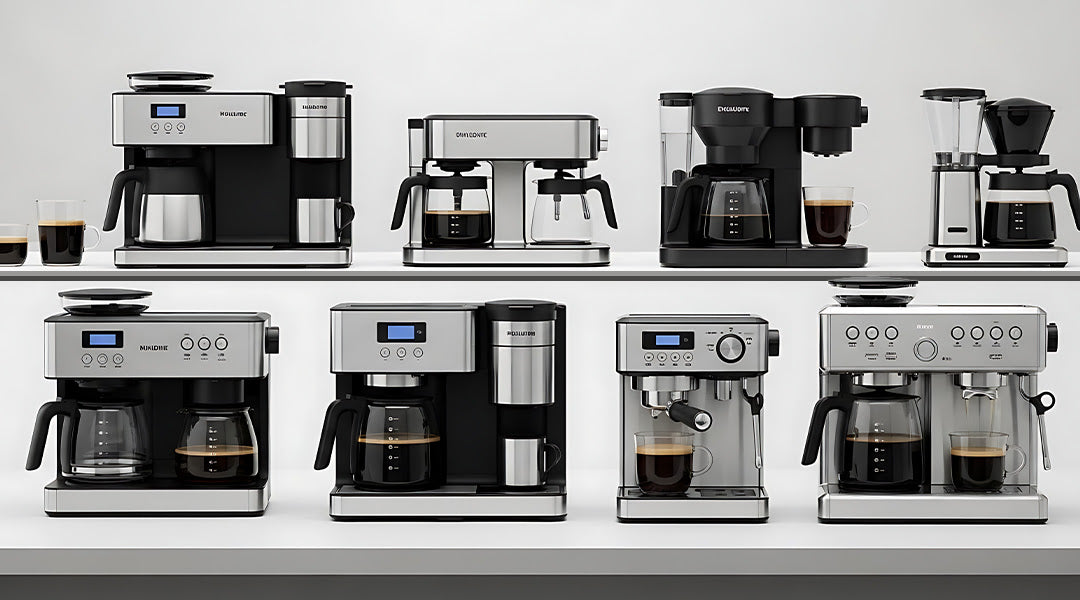
Best Dual Coffee Maker: Top Combination 2-Way Brewers
Quick Answer
Dual coffee makers, also called 2-way brewers, brew carafes and single cups in one machine. Some also handle espresso, over-ice, and cold brew modes. Our picks cover Ninja for many brew modes, Hamilton Beach for value, Keurig for compact ease, De'Longhi for true espresso plus drip, Cuisinart for iced settings, Goat Story for hobby tinkerers, and CucinaPro for two carafes at once.
Key-Takeaways
- Start with brew styles you'll use daily.
- Thermal carafes keep flavor, glass favors price.
- Pods are convenient; grounds improve taste, cost, footprint.
- Check footprint, reservoir placement, and counter clearance.
- Prioritize hot water temps, flow, and strength control.
- Try Lifeboost low-acid beans in your dual brewer.
Morning comes in two flavors at my house. On weekdays, it's a frantic grab for a quick cup before rushing out the door. But weekends? That's when the 12-cup carafe comes out for lazy brunches with friends. I got tired of switching between machines and counter spaces. That's when I discovered dual coffee makers. My kitchen became simpler, and my coffee routine more consistent.
Buyer's Guide: How to Choose the Right Combination 2-Way Brewer

The Decision Framework
First, identify how you drink coffee most days. Do you need single-serve options for quick mornings? A full carafe for family breakfasts? Maybe both? Your primary use case should guide your purchase decision.
Then consider any secondary modes you might enjoy. Some dual brewers also make espresso-style coffee, iced drinks, cold brew, or dispense hot water for tea. The more functions you need, the more you'll pay – but buying one machine is still cheaper than buying multiple specialized brewers.
Pods vs. Grounds vs. Both
Coffee pods are easy to use. They save time. They also bring tradeoffs. The coffee inside is pre-ground, so flavor fades with storage. The cost per cup goes up. Waste adds up too. Industry estimates say billions of pods reach landfills each year.
Fresh grounds give you fuller taste, lower cost per cup, and less waste. Many dual brewers let you use pods, grounds, or both. Refillable pod filters sit in the middle: you get pod-style speed with the flavor of fresh grounds.
Thermal vs. Glass Carafe
Thermal carafes keep coffee hot without a hot plate. Flavor stays truer for hours. The body is tough and resists breaks. You pay more at the start, and that is the main tradeoff.
Glass carafes suit people who pour soon after brewing. A hot plate keeps the pot warm, and a stronger taste can build over time. Price is lower. You also see the level at a glance.
Brew Temperature, Flow, Strength, and Contact Time
The Specialty Coffee Association lists 195–205 °F as the target brew range. Below that range, extraction runs light and can taste sour or weak. Above that range, extraction runs heavy and can taste bitter or harsh.
Good dual brewers add strength controls. They may change water flow or the grounds-to-water ratio. For iced coffee, pick a brewer that makes a stronger concentrate. That extra strength offsets melting ice.
Space, Tank Placement, and Usability
Measure your counter and the space under your cabinets. Some machines let you move the water tank to the back or sides, so fit is easier in tight kitchens.
Look for parts that clean fast. Check space for tall travel mugs. Note the noise level if you brew early. Timers, auto-off, and pause-and-serve raise day-to-day ease. They also add menu steps, so setup can take longer at first.
Best Dual Coffee Maker Quick Comparison

Our Picks: The 8 Best Dual Coffee Makers
De'Longhi BCO430 Combination Machine

The De'Longhi BCO430 is different. It makes real espresso and drips in the same body. This is not just a strong drip called “espresso.” A 15-bar pump and De'Longhi’s extraction system pull true shots with crema.
Shots with medium and dark roasts came out sweet and robust. The crema was thick and lasting. A manual steam wand with a froth-assist cover helps with milk. Lattes and cappuccinos are within reach at home. After a few tries, the milk texture started to feel natural.
The drip side holds its own. It makes tasty coffee in a 10-cup pot. You can set a timer, choose strength, and set auto-shutoff. A dual heating system runs both sides at once. That means you can brew drip and pull espresso at the same time. It helps when people in the home want different drinks or when you want a red eye.
Price and size sit above simple two-way brewers. In return, you replace two machines with one. Espresso has a learning curve, so expect some dialing-in of grind size and dose. The payoff is real. Daily use felt natural after the first week, and the choice between a fast drip cup or a café-style drink added welcome range to my mornings.
Features
- Espresso side with portafilter + steam wand
- 10-cup glass carafe
- Strength control
- Auto-off function
- 24-hour programmable timer
- Separate water circuits for espresso/drip
Pros
- Real espresso capability
- Milk texturing for café drinks
- Can make coffee and espresso simultaneously
- Fully programmable
- Patented flavor extraction system
Cons
- Learning curve for grind/dose/steam
- Larger, heavier build
- Glass carafe only
- Higher price point
Cuisinart SS-16 Coffee Center

The Cuisinart Coffee Center joins two daily needs in one unit. On one side, a 12-cup glass carafe brews classic drip. On the other side, a single-serve station takes K-Cups or the included reusable filter for fresh grounds. A standout here is the “Over Ice” setting. It brews at higher strength so flavor holds when it hits ice.
In use, the Over Ice mode gave richer iced coffee than many rivals. Flavor stayed bold as the cubes melted. That common watery taste never showed up. On hot days, this setting became my go-to. I did not need a separate cold brew maker to get a strong iced cup.
Speed also stood out. With the brand’s ExtremeBrew feature, a full 12-cup carafe finished in about seven minutes from a cold start. Many rivals take ten to twelve minutes. On busy mornings, those saved minutes matter.
Daily touches help as well. You can set the hot plate temperature to avoid that scorched taste from long holds. A 24-hour timer lets you wake up to a fresh pot. A self-clean cycle cuts down on upkeep. My one gripe is the top-fill water tank. It needs extra space above the lid, so it is less handy under low cabinets than side-fill designs.
Features
- Six single-serve sizes (4–12 oz + Over Ice)
- Refillable single-serve filter + K-Cup compatibility
- 12-cup glass carafe
- 24-hour timer
- Auto-off function
- Self-cleaning cycle
Pros
- Excellent iced coffee concentration
- Quick full-carafe brew
- Simple controls and clear display
- Adjustable hot plate temperature
- Multiple brew size options
Cons
- Top-fill water tank can feel awkward
- Glass carafe (no thermal option)
- Larger footprint than single-serve units
- Premium price point
Ninja CFP307 DualBrew Pro

The Ninja DualBrew Pro defies simple categorization. Calling it a "dual" brewer actually undersells its capabilities – it offers multiple brewing methods and styles in a single machine. The primary modes include brewing into a 12-cup glass carafe or making single servings using either coffee pods or fresh grounds. But the DualBrew Pro goes further with four distinct brew styles: Classic, Rich, Over Ice, and Specialty.
During testing, the Specialty setting stood out fast. It brews a concentrated shot like espresso, which makes a strong base for cappuccinos and lattes. The fold-away milk frother adds the finishing touch. It whips silky microfoam, so you get café-style drinks without buying a separate frother. If you enjoy milk drinks and do not want a true espresso machine, this feels like a friendly middle path.
The flexibility reaches into serving sizes. With K-Cups, you can pick four cup sizes from 6 to 12 ounces. In our tests, the larger pod sizes tasted a bit thin, so the Rich setting helps bring back body. With ground coffee, you get nine size options from a single cup to a full carafe. Grounds gave better flavor across every size, and they shined in Specialty and Over Ice modes.
One design touch deserves a callout: the movable 60-ounce water reservoir. You can place it at the back or at the side, so it fits the counter you have. This smart setup, plus hot water at two temperatures for tea, made the DualBrew Pro the most adaptable unit we tested. The main tradeoffs are the higher price and the mostly plastic build, which does not feel as upscale as some rivals.
Features
- Four brew styles: Classic, Rich, Over Ice, Specialty
- Nine ground coffee sizes; four pod sizes
- Fold-away milk frother
- Hot water dispensing at two temperatures
- Movable 60-oz water reservoir
- Compatible with K-Cups and grounds
Pros
- Most comprehensive brewing options
- Built-in frother for milk drinks
- Flexible reservoir placement
- Nine brew sizes with ground coffee
- Specialty brew for espresso-style drinks
Cons
- Premium price
- Mostly plastic chassis
- Counter height clearance needed
- Learning curve for multiple functions
Keurig K-Duo Plus

The Keurig K-Duo Plus blends pod brewing with carafe service. It saves space and still handles both single cups and big batches. At under eight inches wide, it slides into tight kitchens, which makes it a smart pick for small apartments or offices.
The standout design is the 60-ounce reservoir that you can reposition. Put it on the left, right, or back to match your layout. It also accepts Keurig water filters (sold separately) to improve water quality and boost flavor if your tap water has an off taste.
For single cups, choose 6, 8, 10, or 12 ounces with K-Cups. In our tasting, the larger sizes ran weak with many pods. Stick to the smaller sizes or hit the Strong setting to help. The carafe side uses a gold-tone filter for grounds and brews up to 12 cups. A pause-and-pour lets you grab a cup before the brew ends, which helps on busy mornings.
You also get useful programming, like a 24-hour timer and strength control. One caveat from our checks: the brew temperature averaged about 185°F, not the 195–205°F range many pros suggest. That led to slightly lighter extraction than hotter machines. The thermal carafe kept coffee warm without a hot plate, though it cooled faster than high-end thermal designs.
Features
- Four single-serve sizes: 6, 8, 10, 12 oz
- 12-cup carafe capacity
- Gold-tone basket for carafe brewing
- Auto-brew timer
- 5-minute auto-off function
- Movable water reservoir
Pros
- Space-saving design
- Flexible reservoir placement
- Very simple operation
- Thermal carafe (no hot plate needed)
- Pause-and-pour function
Cons
- Brew water temperature runs cool
- Larger single-serve sizes taste weak with pods
- Pod brewing less economical
- Limited thermal retention
Hamilton Beach Two-Way Brewer (49933)

The Hamilton Beach Two-Way Brewer brings a strong feature set at a friendly price. It brews a 12-cup carafe or a single serving with ground coffee only—no pods. The body uses BPA-free plastic with stainless accents. The look is clean and simple, and it punches above its price tag.
Brew performance beat what I expected at this cost. The coffee came out hot and tasty, and a full 12-cup carafe finished in under ten minutes. You also get helpful controls: a 24-hour timer, a pause-and-serve sip mid-brew, and regular or bold strength choices. You often see these on machines that cost more.
I liked the plain, clear control panel. Labels are easy to read, and you can run it without the manual. No pod slot might feel like a limit, but it cuts waste and nudges you toward fresh grounds for better taste. The single-serve side fits most travel mugs once you remove the drip tray.
I did notice one small quirk. The single-serve side can splatter into short cups. Using a taller mug or shifting the cup helps. The glass carafe does its job, but it needs the hot plate to keep coffee warm, and that can change flavor over time. At this price, these are fair tradeoffs for fast brewing and handy programming.
Features
- 12-cup glass carafe
- Single-serve basket for grounds
- 24-hour timer
- Regular/bold strength options
- Auto-pause brewing function
- BPA-free construction
Pros
- Excellent value
- Fast full-pot brewing
- Simple, intuitive interface
- Programmable features
- Attractive design for the price
Cons
- No K-Cup compatibility
- Some splatter on single-serve side
- Glass carafe retains heat on hot plate only
- Limited to one brewing style
Goat Story Gina Smart Brewer

The Goat Story Gina offers a different approach to multi-method brewing. Unlike the automatic machines on this list, the Gina requires hands-on involvement – but rewards that effort with exceptional coffee quality. This beautifully designed brewer combines three manual methods: pour over, immersion (similar to French press), and slow-drip cold brew.
Gina's build shows real care for coffee. It uses stainless steel, ceramic, and glass. It feels solid in the hand and looks sharp on a counter. The built-in smart scale pairs with a companion app that guides each brew step. You can weigh beans with care and control your pour rate with ease. This blend of classic brewing and simple phone guidance gives you an easy path into specialty methods. It keeps the craft feel but lowers the barrier for anyone who wants better cups at home.
I found the Gina shines with light roasts. These delicate beans can taste sour or thin in many automatic machines. Here, the adjustable flow valve and stable temperature control lift the bright, fruity notes that make light roasts sing. In one session, I brewed an Ethiopian coffee that opened up with berries and soft florals. My old automatic brewer never showed those layers so clearly. The cup felt clean, lively, and balanced from first sip to last.
The slow-drip cold brew deserves its own highlight. Most cold brew makers use full immersion and steep for twelve to twenty-four hours. Gina takes a different route. It runs a slow, steady drip where water moves through the grounds drop by drop. You still get cold brew’s smooth, low-acid profile, but you also gain more clarity and brightness in the cup. Setup takes a moment and patience helps—expect eight to twelve hours of gentle dripping. The payoff was the most complex cold brew I’ve had from a home device, with clear notes and a long finish.
Features
- Three brewing methods in one device
- Built-in smart scale with Bluetooth
- App-guided brewing recipes
- Precision valve for flow control
- Ceramic/steel/glass construction
- 5-cup capacity
Pros
- Exceptional coffee quality
- Beautiful, durable materials
- App guides brewing process
- Superior with specialty beans
- Unique slow-drip cold brew
Cons
- Requires manual brewing effort
- Higher price than basic brewers
- Smaller batch sizes
- Learning curve for best results
CucinaPro Double Coffee Brewer Station

The CucinaPro Double Coffee Brewer Station takes a different path to dual brewing. It is basically two full drip machines in one frame. You can brew two twelve-cup carafes at the same time. That makes it handy for offices and big households. It also helps when you want regular and decaf ready together without waiting.
In office testing, the benefits were clear. We brewed a dark roast and a light roast side by side, so every taste was covered. Each side runs on its own with a separate water tank, filter basket, carafe, and switch. The box even includes two scoops, one for each side, so you can measure without washing in between. The setup saves time and reduces mix-ups during a rush.
Brew quality is sound, if not tuned like high-end single units. The coffee comes out hot and tastes good. You do not get deeper control features, though. The hot plates keep coffee warm, yet flavor starts to fade after thirty to forty-five minutes, which is common with glass carafes. Water windows on both sides make it easy to check levels at a glance and avoid dry starts.
The main limit is the lack of programmability. You cannot set a start time, and there are no strength controls. What you get is straight drip coffee. Even so, the CucinaPro nails its core job: brewing two different pots at once without taking twice the space or budget. For homes split between regular and decaf—or dark and light—this simple, practical design can be worth more than extra features.
Features
- Two 12-cup glass carafes
- Two separate water reservoirs
- Twin filter baskets and controls
- Independent brewing systems
- Two warming plates
- Dual water level indicators
Pros
- True dual-carafe capability
- Practical for mixed coffee preferences
- Space-saving versus two machines
- Budget-friendly compared to two units
- Simple, straightforward operation
Cons
- No programmable functions
- Limited to standard drip brewing
- Large footprint on counter
- Glass carafes only (no thermal option)
How We Evaluated Combination Brewers

Testing dual coffee makers requires a comprehensive approach to account for multiple brewing modes and features. We developed a systematic protocol to ensure fair comparison across various models, focusing on factors that impact daily use and long-term satisfaction.
For temperature consistency, we measured brew water at multiple points during the cycle using laboratory-grade thermometers. The ideal range for proper extraction is 195-205°F according to the Specialty Coffee Association. Machines brewing significantly below this temperature received lower ratings as they typically produced under-extracted coffee lacking full flavor development.
Flavor evaluation included blind taste tests using the same medium roast coffee across all machines. For pod-compatible brewers, we used identical K-Cup varieties. We maintained consistent coffee-to-water ratios based on manufacturer recommendations and repeated tests across all available brew modes. For over-ice brewing, we assessed concentration before and after ice melt to evaluate dilution resistance.
We timed heating and brewing cycles to account for morning efficiency needs. Quick start-up times and rapid brewing earned higher marks, provided they didn't compromise extraction quality. We also evaluated noise levels during operation, as loud grinding or pumping can disrupt quiet mornings.
Usability factors included water tank accessibility, programming intuitiveness, cleaning requirements, and how well each machine accommodated different cup sizes. We noted special features like movable reservoirs or adjustable temperature settings that enhanced practical everyday use.
Our testing had some limitations. Water chemistry varies by location and can affect extraction, so your results might differ slightly based on local water hardness. Additionally, espresso functionality on combination units can't fairly be compared to dedicated espresso machines costing several times more. We evaluated espresso features based on what's reasonable to expect from multi-function machines in similar price ranges.
Quick How-To: Dial-In Your Dual Brewer

Getting the best from a dual coffee maker calls for a few small tweaks. Follow these steps to dial in your brew:
1. Choose the brew mode that fits your plan: carafe, single-serve, over-ice, or espresso. Each mode uses different extraction settings.
2. Measure coffee with care, using a digital scale if you can. For standard drip, start with one to two tablespoons (seven to fourteen grams) per six ounces of water. Go lower
for stronger coffee with dark roasts. Go higher for lighter roasts that need more grounds.
3. Match grind size to the method. Use medium for drip, fine for espresso functions, and coarse for cold brew. Pre-ground coffee is usually sized for standard drip.
4. Use filtered water to boost flavor and slow mineral buildup. Hard water changes extraction and means more frequent descaling.
5. If you use paper filters, pre-rinse them with hot water and pour away the rinse. This removes paper taste and warms the brew path.
6. For pod brewing, try refillable filters with fresh grounds. They taste better than most pre-filled pods and cut waste.
7. Clean the machine on a schedule per the maker’s guide. Descale every one to three months based on your water hardness and how often you brew.
Conclusion
This guide was developed through hands-on testing of each dual coffee maker using standardized protocols. We evaluated brewing temperature (targeting the SCA-recommended 195-205°F range), extraction quality, and usability factors. All machines were tested with the same medium roast coffee for baseline comparison.
We looked at the environmental impact of common brewing methods. We paid close attention to single-use pods. When you can, choose refillable options. They cut waste and still keep things easy.
Want your new dual coffee maker to shine? Try Lifeboost’s Low-Acid Medium Roast. It brings out a rich flavor in every brew mode. Our beans are shade-grown at high elevation. They are hand-picked and tested to be free of mycotoxins and pesticides. The smooth, clean profile suits carafe brewing and single-serve cups. It also works great over ice, where the naturally low acidity stands out.


Frequently Asked Questions (FAQs)
What qualifies as a "dual coffee maker"?
A dual coffee maker brews coffee in at least two ways or formats. The most common setup combines a full carafe and single-serve brewing. Some machines also add espresso, cold brew, or over-ice modes. As noted on Wikipedia’s guide to coffeemakers, modern machines have grown from simple tools to multi-function systems that blend drip methods with pressure extraction.
Can one machine really do espresso well?
Some combo machines with true espresso parts, like the De'Longhi BCO430, can pull real espresso with crema. They use real pump pressure of at least 9 bars, not just strong drip. They will not match fine control from high-end dedicated machines. Still, they give good results for casual home use.
Are K-Cups worse for taste and the environment?
K-Cups hold pre-ground coffee that gets stale over time, and you cannot adjust grind for roast or recipe. They also make a lot of plastic waste. You can choose compostable pods or refillable pods to cut that waste. For flavor and the planet, refillable pods with fresh grounds are a solid middle path. You keep speed and raise cup quality.
Is thermal always better than glass?
Thermal carafes hold heat without a hot plate, so flavor stays steady and does not turn “cooked.” They are also tough. Glass carafes cost less and let you see the level at a glance. But they sit on a warming plate that can change flavor over time. If your house drinks the pot fast, glass is fine. If you sip through the morning, thermal is worth it.
What brew temperature should I look for?
Aim for 195–205°F. Below that range the cup tastes weak or sour. Above that range bitter notes take over. Check the maker’s specs or reliable tests for this detail. It matters a lot for taste.
What's the difference between over-ice and cold brew?
Over-ice brewing uses hot water and a stronger ratio. Then you pour over ice to cool at once. Cold brew steeps grounds in cold water for 12–24 hours. It makes a smooth cup with naturally low acid. Over-ice is fast but can taste sharper. Cold brew takes time but often tastes round and gentle.
How do I avoid weak single-serve cups?
Use the smallest cup size setting. Choose a “strong” or “bold” mode if you have it. Pick a dark roast. Try refillable pods with fresh grounds and a higher dose than many pre-filled pods. Make sure your machine reaches the right brew temp of 195–205°F.
About the Author
This article was written by the Lifeboost writing team. We reviewed current medical research, including studies from the International Neurourology Journal and BMC Urology. We also used guidance from trusted sources such as the Mayo Clinic, the NHS, and WebMD.
Disclaimer: This article is for education only. It is not medical advice. The statements about coffee properties have not been reviewed by the FDA. Our product notes are based on our testing and research, and results can vary from person to person.
Check out Lifeboost Coffee Grata Medium Roast.


